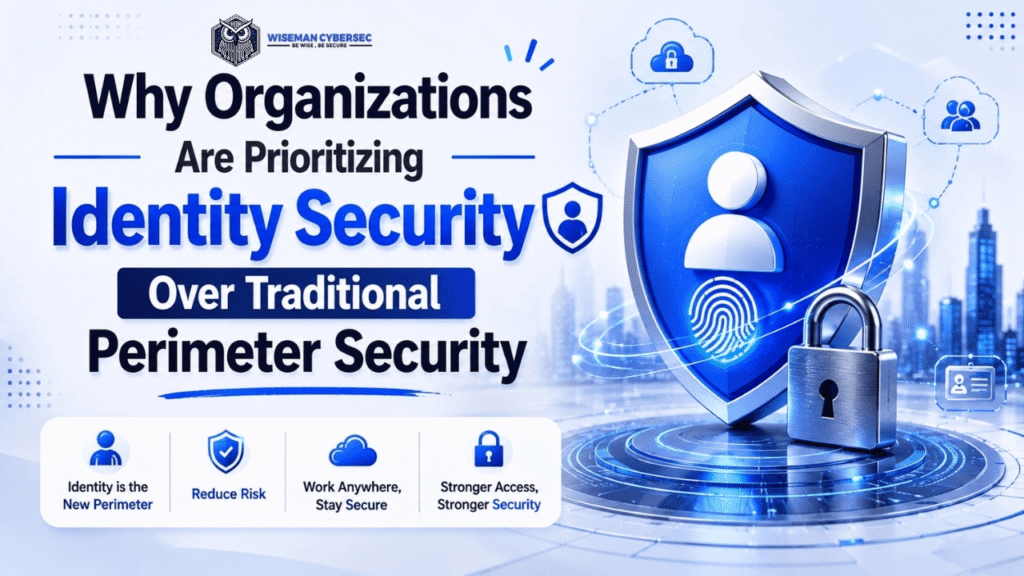
Why Organizations Are Prioritizing Identity Security Over Traditional Perimeter Security
Organizations are shifting away from traditional perimeter-based security because the perimeter itself has changed. With cloud adoption, remote work, SaaS applications, mobile devices, and distributed teams, security can no longer depend on a fixed network boundary. Identity security has become the new control point because access now matters more than location. Instead of asking whether a user is inside the network, organizations are asking who the user is, what device they are using, what risk they pose, and whether they should be trusted at all. The Problem With Traditional Perimeter Security: Traditional perimeter security was built around a simple idea: keep threats outside the network and trust what is inside. Firewalls, VPNs, and network segmentation were effective when employees worked in offices and most applications stayed on-premises. That model is much less effective today. Users connect from home, coffee shops, airports, and personal devices. Applications run in cloud environments. Data moves across multiple platforms and third-party services. In this environment, the perimeter is no longer a clear line, which makes perimeter-only security too weak for modern risk. Attackers also know this. Rather than trying to break through a firewall, they often target identities directly through phishing, credential theft, password spraying, MFA fatigue attacks, token abuse, and privilege escalation. Once identity is compromised, the attacker may appear legitimate and bypass traditional boundary defenses. Why Identity Has Become The New Perimeter: Identity is now the most important security control because it governs access to systems, applications, and data. If an organization can verify identity accurately and enforce access policies intelligently, it can reduce risk across the entire environment. This shift reflects a broader security principle: trust should not be based on network location alone. Instead, trust should be determined through identity, device posture, user behavior, application sensitivity, and contextual risk signals. In practice, this means the user’s identity becomes the gateway to everything else. Whether a person is trying to access email, financial records, customer data, or cloud resources, identity controls determine whether that access is allowed, limited, or blocked. How Identity Security Reduces Risk: Identity security reduces risk by ensuring that access is tightly controlled and continuously validated. This includes strong authentication, least privilege access, conditional access policies, privileged access management, and identity governance. When done properly, these controls prevent unauthorized access, limit lateral movement, and reduce the impact of compromised accounts. Even if an attacker obtains a password, additional controls such as multifactor authentication, risk-based policies, and device compliance checks can stop the breach from progressing. Identity security also helps organizations respond faster. If a suspicious sign-in is detected, access can be challenged, limited, or revoked immediately. That kind of control is much harder to achieve with perimeter defenses alone. Supporting Modern Work Styles: One of the biggest reasons organizations are prioritizing identity security is that people work from everywhere now. Employees, contractors, partners, and vendors all need access to corporate systems, often outside the traditional office network. Identity-based security makes this possible without sacrificing control. Users can access what they need from anywhere, while the organization still enforces authentication, authorization, and policy-based restrictions. This creates a better balance between security and productivity. It also supports a better user experience. Single sign-on, passwordless authentication, and adaptive access policies make it easier for users to work securely without repeatedly logging in or dealing with unnecessary friction. Identity Security And Zero Trust: Identity security is a foundational part of Zero Trust. The Zero Trust model assumes that no user, device, or network should be trusted automatically. Every access request must be evaluated before it is approved. This is only possible when identity is at the center of the architecture. Identity provides the data and controls needed to verify users, enforce policy, and make access decisions based on real-time risk. In a Zero Trust model, identity is not a one-time login step. It is a continuous trust mechanism that supports secure access throughout the session. This is one reason why identity security is becoming more important than traditional perimeter controls. The Role Of Strong Access Controls: A major advantage of identity security is stronger access control. Organizations can assign permissions based on role, responsibility, and context instead of giving broad access to entire network segments. This reduces unnecessary exposure and helps enforce the principle of least privilege. Users get access only to what they need, when they need it, and in the way they need it. That significantly lowers the chance of misuse or accidental overexposure. Strong access controls are especially important for privileged accounts, sensitive data repositories, administrative consoles, and cloud platforms. These are the areas attackers often target first after gaining entry. Business Benefits Beyond Security: Identity security is not only about reducing attacks. It also supports business agility, compliance, and digital transformation. Organizations can onboard users faster, manage access more efficiently, and maintain better oversight of who has access to what. This is particularly valuable in large enterprises where manual access management can become slow and error-prone. Identity governance helps automate approvals, reviews, and lifecycle changes, which improves both security and operational efficiency. It also helps organizations demonstrate compliance. Many frameworks and audits expect clear evidence of authentication controls, access reviews, and privileged access oversight. Identity security provides the structure needed to meet those expectations. Why The Shift Will Continue: The move from perimeter security to identity security is not a temporary trend. It is a response to how business and technology actually work now. As cloud environments expand, AI-driven attacks increase, and organizations continue to operate in distributed models, identity will remain the most practical place to enforce security. Perimeter tools will still matter, but they are no longer enough on their own. The future of cybersecurity will be built around identity, context, and continuous verification. Organizations that invest in identity security today will be better prepared for that future. Final Thoughts: Organizations are prioritizing identity security over traditional perimeter security because the environment has changed, the threats have changed, and the way people work has changed. Identity