A Ransomware Attack Hits Production Systems: What Security Leadership Should Do First
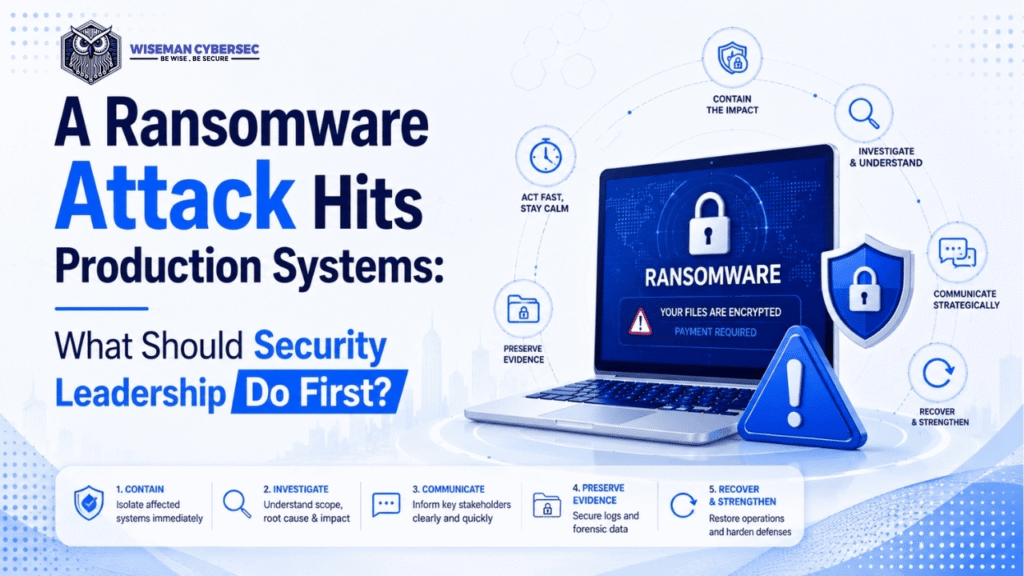
A ransomware attack on production systems is one of the most disruptive incidents an organization can face. It can freeze critical business operations, interrupt customer services, damage trust, and create immediate pressure on every part of the business. When production systems are affected, security leadership cannot afford confusion or delay. The first few hours after detection often determine how severe the impact becomes. A fast, structured response can limit spread, protect evidence, support recovery, and reduce long-term damage. That is why security leadership must know exactly what to do first when ransomware strikes. Why Production Systems Are So Critical: Production environments are the backbone of an organization. They power customer applications, internal business platforms, financial systems, databases, cloud workloads, and operational technology. If ransomware reaches these systems, the organization may lose access to the very services it depends on to function.This makes the incident more than a technical issue. It becomes a business continuity problem, a legal and compliance concern, and often a reputational crisis. In many cases, the cost of downtime can exceed the ransom demand itself. The First Priority: Containment: The most important first step is containment. Security leadership must act quickly to isolate affected systems and prevent the malware from spreading further. This may involve disconnecting infected machines from the network, disabling compromised accounts, stopping remote access sessions, and separating critical segments of the environment. Containment must be decisive, but it should also be thoughtful. Shutting down systems too aggressively or making unnecessary changes can destroy evidence that investigators will need later. The goal is to stop the attack while preserving the ability to understand what happened. A good containment decision balances speed with control. Security leaders should focus on limiting lateral movement, protecting backups, and preventing the attacker from reaching additional systems. Understanding The Scope Of The Incident: Once the spread is under control, the next step is to determine the full scope of the attack. Security teams need to understand which systems were impacted, how the attackers entered, what data may have been accessed or stolen, and whether any backup repositories were touched. This stage is critical because ransomware incidents are rarely simple. Some attacks only encrypt systems. Others also exfiltrate sensitive data, plant persistence mechanisms, or disable recovery options. Without a clear understanding of the scope, leadership may underestimate the risk or make recovery decisions too early. The investigation should also identify the attack vector. Was it a phishing email? A stolen credential? An exposed remote access service? An unpatched vulnerability? Knowing the entry point helps prevent the same thing from happening again. Clear Communication During Crisis: Ransomware incidents create uncertainty, and uncertainty spreads quickly. That is why security leadership must communicate clearly with executives, IT teams, legal counsel, business owners, and other key stakeholders. Everyone involved needs timely, factual information about what is known, what is not yet known, and what actions are being taken. Communication should be strategic. It should avoid speculation, but it should not be so cautious that it leaves people uninformed. In a crisis, silence creates more problems than honest, coordinated updates. If the incident has regulatory, contractual, or customer notification implications, leadership should also work with the appropriate internal teams to ensure the right external communication happens at the right time. Messaging should be consistent and aligned with the current facts. Preserving Evidence Matters: Even during a major attack, organizations must preserve logs, forensic data, and other evidence. This includes endpoint artifacts, server logs, authentication records, ransom notes, and any suspicious files or processes related to the incident. Preserving evidence is important for several reasons. It supports forensic investigation, helps confirm the scope of compromise, assists in legal and insurance matters, and may support law enforcement involvement. It also helps the organization learn from the event and strengthen defenses after recovery. In the pressure of a live incident, it is tempting to focus only on restoration. But if evidence is lost, the organization may never fully understand how the attacker got in or how deeply they moved through the environment. Recovery Must Be Careful: Recovery should begin only after the environment is sufficiently understood and trusted. This often means restoring systems from known-clean backups, rebuilding infected machines, resetting credentials, and validating that malicious access has been removed. Recovery is not just about getting systems back online. It is about restoring them safely. If the attacker still has a foothold, simply rebooting or re-enabling services can cause reinfection. That is why validation is so important. Organizations should also test restored systems before putting them back into production. This includes checking for persistence mechanisms, reviewing privileged accounts, confirming patch levels, and ensuring backups are clean. A rushed recovery may solve the immediate outage but create a second incident later. Strengthening Security After The Attack: A ransomware incident should always lead to a stronger security posture. Once the immediate crisis is over, leadership should review what failed, what worked, and what needs to change. This review should include backup strategy, identity controls, patch management, monitoring, segmentation, and incident response readiness. Many ransomware attacks succeed because of a combination of small weaknesses rather than one major failure. Weak passwords, excessive privileges, delayed patching, poor network separation, and lack of backup protection can all contribute to a serious incident. Fixing only one issue is not enough. Organizations should also use the event to improve training and preparedness. Regular tabletop exercises, crisis communication planning, and ransomware recovery drills can make future responses much more effective. The more prepared the team is, the less likely panic will take over during the next incident. What Security Leadership Should Remember: In a ransomware event, security leadership must stay focused on five priorities: contain, investigate, communicate, preserve evidence, and recover securely. These steps create a disciplined response that protects both the business and the investigation. The goal is not just to remove the ransomware. The goal is to restore operations safely, reduce business impact, and make the organization more resilient against the next attack. A calm, well-led