Artificial intelligence is no longer limited to answering questions or generating content.
AI agents can now read emails, access documents, query databases, create tickets, interact with cloud platforms, execute code and initiate business workflows. In many organisations, they are being connected to the same applications and data used by employees and administrators.
That creates a critical cybersecurity question:
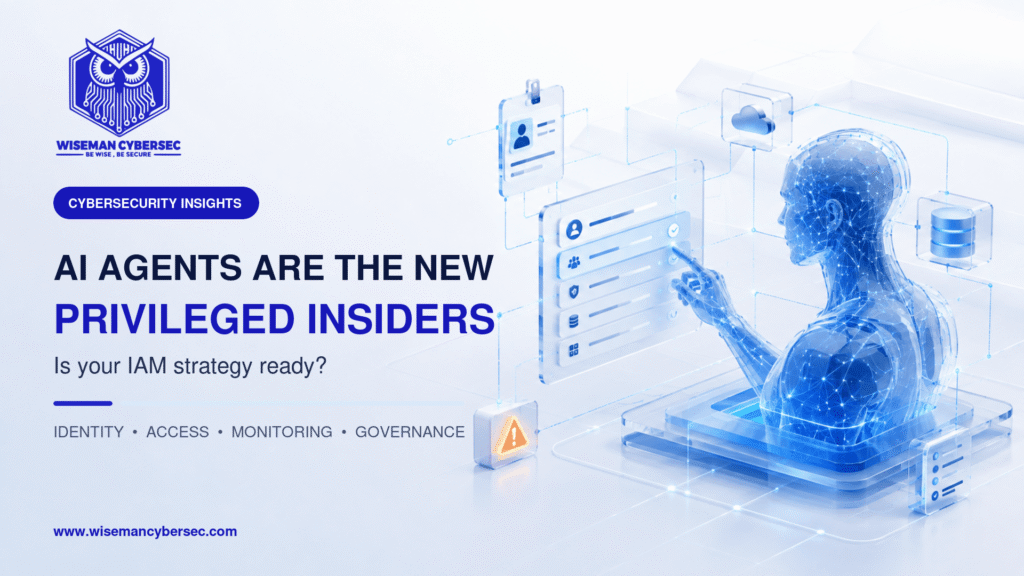
If an AI agent can access sensitive systems and take actions independently, should it be treated like a user, an application—or a privileged insider?
The answer may define the next major challenge for Identity and Access Management.
From AI Assistant to Digital Actor
Traditional AI assistants primarily provided information. Agentic AI changes this model because an agent can interpret a goal, decide what steps to take, use connected tools and act with limited human supervision.
This is valuable—but it also changes the risk.
An ordinary chatbot may produce an incorrect answer. A highly privileged AI agent could send an email, modify a record, expose confidential data, change cloud resources or execute an unauthorised command.
The security conversation must therefore move beyond “Is the AI model safe?” to a more operational question:
“What identity is the agent using, what is it allowed to access and who is accountable for its actions?”
Every AI Agent Needs an Identity
Employees have user accounts. Applications have service identities. Workloads have machine identities.
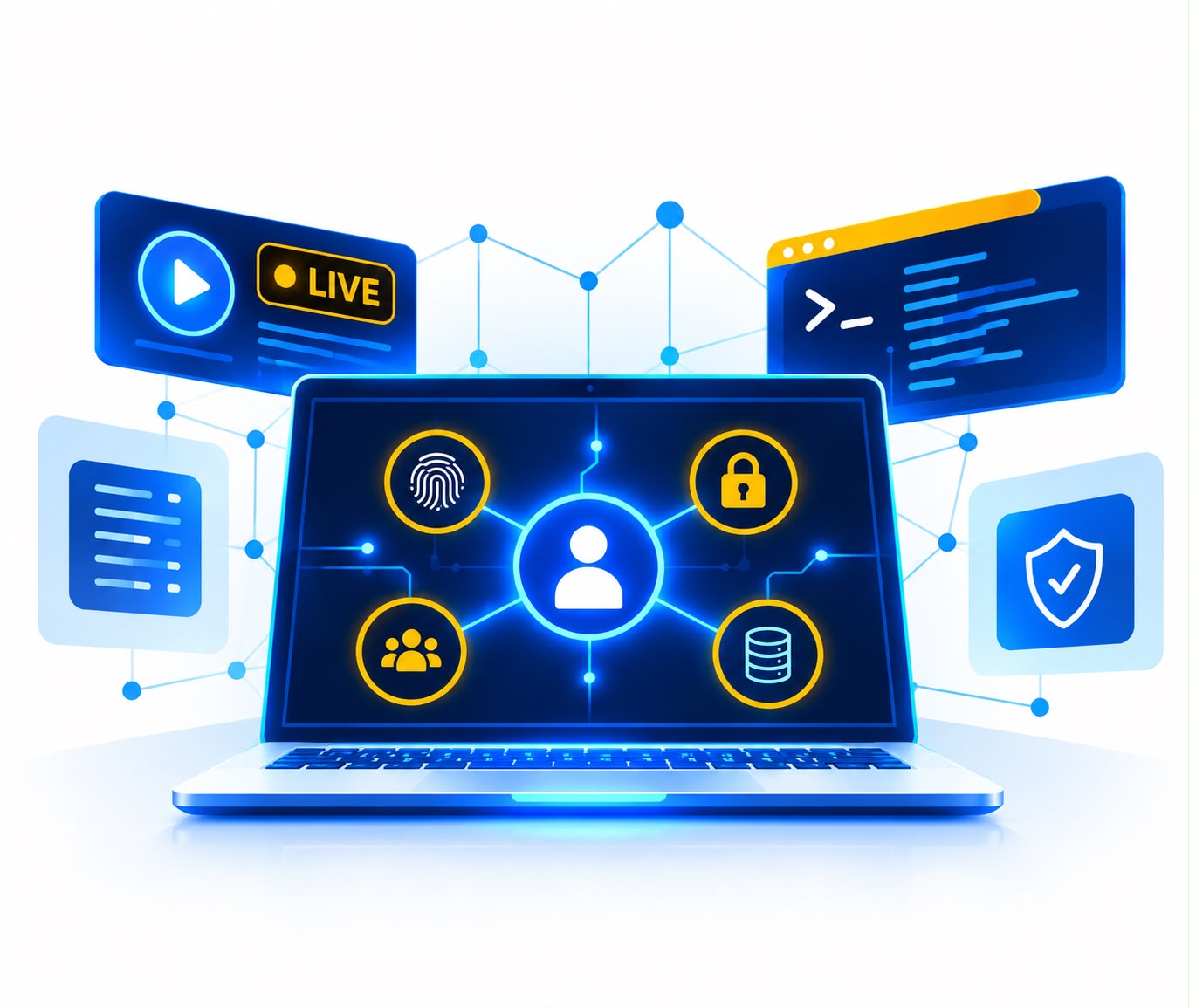
AI agents also need identities that can be individually authenticated, authorised, monitored and revoked.
However, many early AI deployments rely on:
- Shared service accounts
- Long-lived API keys
- Broad OAuth permissions
- Credentials inherited from a human user
- Excessive access to connected tools
- Limited visibility into agent-initiated actions
When several agents operate through one shared account, security teams may see that an action occurred without being able to determine which agent initiated it, why it was performed or whose instruction triggered it.
This weakens accountability and creates serious challenges for auditing, incident response and regulatory compliance.
How an AI Agent Can Become a Privileged Insider
An AI agent does not need malicious intent to create insider-like risk. It only needs excessive access, an unsafe instruction or a compromised integration.
1. Indirect prompt injection
An attacker can hide malicious instructions inside an email, webpage, document or data source that an agent is asked to process. If the agent treats that external content as a trusted instruction, it may disclose information or perform an unauthorised action.
This is particularly dangerous when the same agent can both consume untrusted content and use privileged tools.
2. Excessive permissions
An agent created to summarise emails may not need permission to send messages or delete content. An agent that analyses cloud configurations should not automatically have the ability to modify them.
Giving an agent more access than its task requires turns a single error or manipulated instruction into a much larger security incident.
3. Stolen tokens and secrets
API keys, session cookies, access tokens and embedded credentials can allow attackers to operate through trusted integrations. Multifactor authentication may not protect an organisation if an attacker steals an already-authorised token.
4. Third-party tools and skills
AI agents increasingly rely on plugins, connectors, tools and reusable skills. A malicious or poorly secured component can become a software-supply-chain entry point, especially when the agent has access to files, systems or command execution.
5. Agent-to-agent escalation
One agent may ask another agent to complete a specialised task. If identities, permissions and trust boundaries are unclear, harmful instructions can travel across several agents while accountability becomes increasingly difficult to establish.
IAM Must Evolve for Agentic AI
The principles are familiar, but they must now be applied to autonomous digital actors.
Give every agent a unique identity
Avoid shared identities wherever possible. Each agent should have a clearly registered owner, business purpose, approved tools and defined data-access scope.
Apply least privilege by default
Grant only the minimum permissions required for the current task. Prefer short-lived, task-specific authorisation over permanent access.
Separate reading from acting
An agent that reads untrusted content should not automatically be able to perform sensitive actions. High-risk capabilities should be isolated and protected by additional approval controls.
Require human approval for critical actions
Financial transactions, privilege changes, data deletion, external communications and production-system modifications should require explicit human confirmation.
Continuously evaluate access
An agent’s permissions should not remain unchanged simply because they were approved during deployment. Access must be reviewed as tools, tasks, data sources and business risks change.
Build an immediate revocation mechanism
Security teams need a reliable way to suspend an agent, revoke its tokens and disable its integrations without affecting unrelated systems.
The SOC Must Monitor Behaviour, Not Just Logins
Traditional monitoring often asks whether the correct identity successfully authenticated. For AI agents, successful authentication is only the beginning.
Security Operations Centres should also monitor:
- Unusual tool usage
- Access outside the agent’s normal task or schedule
- Large or unexpected data retrieval
- New external destinations
- Repeated attempts to bypass restrictions
- Sudden changes in the agent’s sequence of actions
- Sensitive operations performed without the expected approval
The challenge is to establish a behavioural baseline for each agent and identify when its actions no longer match its approved purpose.
This is where IAM, SOC, threat detection and AI governance must work together.
Six Questions Every Organisation Should Ask
Before giving an AI agent access to business systems, security leaders should ask:
- Does this agent have its own unique identity?
- What is the minimum access it genuinely requires?
- Can untrusted content influence its decisions?
- Which actions require human approval?
- Is every instruction, tool call and outcome logged?
- Can we immediately suspend the agent and revoke its access?
If any answer is unclear, the agent may already represent an unmanaged identity risk.
The Future of IAM Is Not Only Human
Organisations are accustomed to managing employees, contractors, applications and service accounts. They must now prepare for an environment containing hundreds—or potentially thousands—of AI agents acting across business systems.
These agents will need identity lifecycle management: registration, authentication, authorisation, monitoring, periodic review and secure decommissioning.
The organisations that establish these controls early will be better positioned to benefit from agentic AI without creating a new class of invisible privileged users.
AI agents may be autonomous, but their access must never be unaccountable.
At Wiseman CyberSec, we believe the future of cybersecurity will require IAM, SOC operations and AI governance to operate as one connected discipline. Security professionals must be prepared not only to protect human identities, but also to govern the rapidly growing population of non-human and agentic identities.
Be Wise. Be Secure.
– Wiseman CyberSec