Your organization has deployed artificial intelligence. But who is responsible for securing it?
AI is transforming how organizations operate, from automated customer support and fraud detection to recruitment, cybersecurity, and business decision-making.
However, AI adoption introduces security challenges that traditional cybersecurity programs may not fully address.
Who evaluates AI-specific threats? Who manages security risks associated with third-party AI models? And who is accountable when AI systems expose sensitive information?
These questions highlight the growing importance of AI security management—and the relevance of ISACA’s AAISM certification.
What Is AAISM Certification?
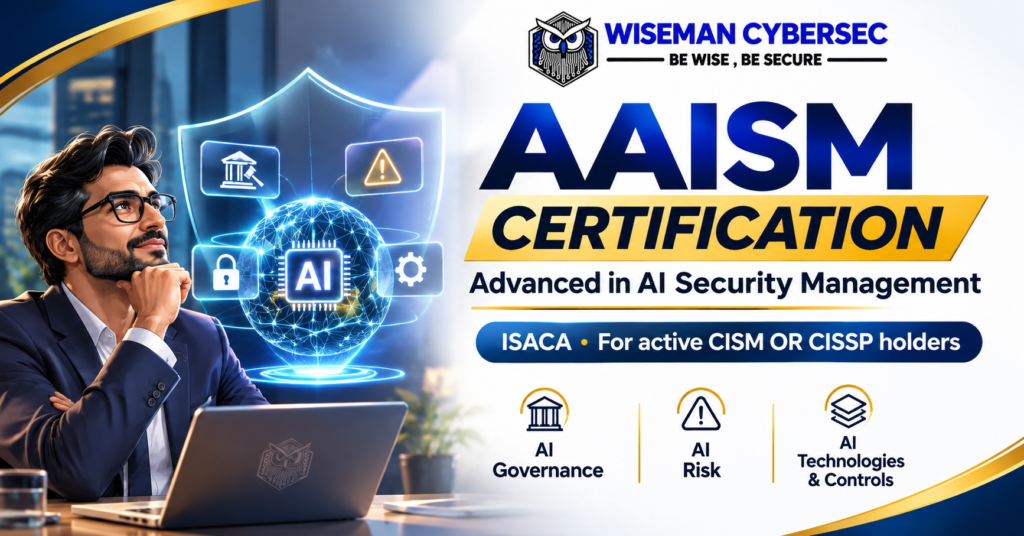
AAISM stands for Advanced in AI Security Management.
Developed by ISACA, AAISM is a specialized certification for experienced information security professionals who want to strengthen their expertise in managing enterprise AI security risks.
Unlike introductory AI courses, AAISM focuses on security leadership, risk management, governance, and technical controls across the AI lifecycle.
It builds on established information security management knowledge while addressing challenges introduced by enterprise AI adoption.
Who Is Eligible for AAISM?
ISACA requires candidates to hold an active CISM or CISSP certification to pursue AAISM.
The credential is particularly relevant for:
- Information Security Managers and CISOs
- Experienced CISM and CISSP professionals
- Cybersecurity and AI Security Leaders
- Enterprise Security and Risk Managers
- Security Consultants working with AI-enabled systems
ISACA also recommends familiarity with assessing, implementing, or maintaining AI systems.
Important: AAISM is intended to complement existing security management expertise, not replace foundational cybersecurity certifications.
AAISM Exam Structure and Syllabus
The AAISM examination consists of 90 questions across three domains.
Domain 1: AI Governance and Program Management — 31%
This domain focuses on establishing and managing enterprise AI security programs.
Key topics include:
- AI security strategies, policies, and procedures
- Stakeholder responsibilities and regulatory considerations
- AI asset and data lifecycle management
- AI security program development
- Business continuity and AI incident response
Practical example: An organization introduces generative AI across multiple departments. Who approves its use, establishes security requirements, and monitors compliance?
Domain 2: AI Risk Management — 31%
This domain addresses how organizations identify, assess, treat, and monitor AI-related security risks.
Key topics include:
- AI risk assessment and treatment
- AI threats and vulnerabilities
- Risk thresholds and monitoring
- Third-party AI vendors and supply chain risks
Practical example: A company integrates a third-party AI model into its customer support platform. How should the security team evaluate data exposure, vendor dependencies, and potential misuse?
Domain 3: AI Technologies and Controls — 38%
The largest AAISM domain focuses on security technologies and controls relevant to AI systems.
Key topics include:
- AI security architecture and design
- AI model selection, training, and validation
- Data management and security controls
- Privacy, ethics, trust, and safety
- AI security monitoring and control effectiveness
Practical example: An AI-powered recruitment system processes applicants’ personal information. What controls help prevent unauthorized access, data leakage, and manipulation of the AI system?
Real-World Scenario: Who Owns AI Security Risk?
Consider an organization deploying an AI-powered recruitment platform.
The AI engineering team confirms that the model performs well.
The HR department reports faster hiring decisions.
Management approves deployment.
But the CISO raises three questions:
1. Security: How are training data, applicant information, and model outputs protected?
2. Risk: Has the organization evaluated threats involving third-party models, manipulation, and unauthorized access?
3. Governance: Who owns AI-related incidents, approves risk treatment, and monitors whether safeguards remain effective?
The key lesson is that successful AI implementation does not automatically mean secure AI implementation.
Managing enterprise AI security requires collaboration between technical teams, business owners, risk professionals, and cybersecurity leadership.
This is the type of cross-functional security management thinking that AAISM is designed to assess.
AAISM vs CISM vs ISO/IEC 42001
These serve different purposes.
| Certification or standard | Primary focus |
| CISM | Enterprise information security management |
| AAISM | Managing AI-specific security risks and controls |
| ISO/IEC 42001 | Requirements for an organizational AI management system |
CISM provides a broad security management foundation.
AAISM extends relevant expertise into AI security management.
ISO/IEC 42001 provides organizational requirements for establishing and improving an AI management system.
They can complement one another, but they are not interchangeable.
How to Prepare for the AAISM Exam
A practical preparation approach includes:
- Review ISACA’s official AAISM exam content outline.
- Assess your knowledge of all three examination domains.
- Study AI-specific threats, governance responsibilities, and risk-management decisions.
- Work through realistic enterprise AI security scenarios.
- Use appropriate practice questions to identify knowledge gaps.
Prioritize understanding how controls support business objectives and risk-management decisions rather than memorizing terminology alone.
Frequently Asked Questions
Is AAISM only for CISSP holders?
No. Candidates must hold an active CISM or CISSP certification.
How many questions are in the AAISM exam?
The examination contains 90 questions across three domains.
Is AAISM suitable for beginners?
AAISM is designed for experienced security professionals. Professionals new to cybersecurity should first build foundational security and risk-management knowledge.
What is the difference between AAISM and AAIA?
Both are ISACA credentials. AAISM focuses on AI security management, while Advanced in AI Audit (AAIA) focuses on auditing AI systems and related practices.
Final Thoughts
AI security is no longer just a technical concern.
It is becoming a critical management responsibility involving enterprise risk, governance, security architecture, third-party dependencies, and accountability.
The question is no longer simply whether organizations are adopting AI. It is whether they can manage its security risks effectively.For experienced cybersecurity professionals, AAISM offers a structured way to demonstrate specialized AI security management knowledge.
– Wiseman CyberSec
Explore AI Security Learning with Wiseman CyberSec
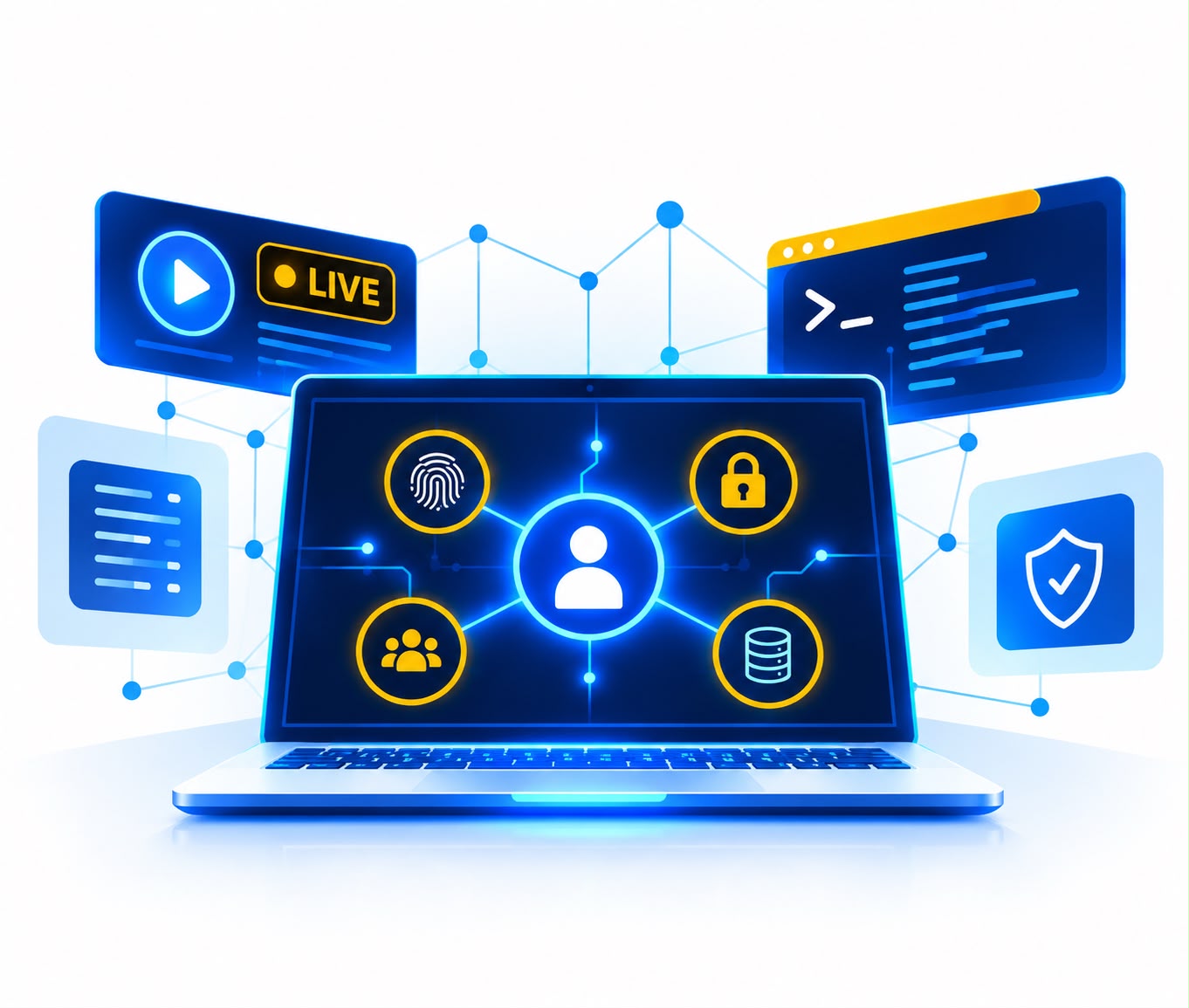
At Wiseman CyberSec, we focus on practical cybersecurity education through instructor-led learning, real-world scenarios, and professional skill development.
Upcoming Batch: 16th January 2026
Duration: 36Hours | Live Instructor-Led Training