20 Network Security Interview Questions and Answers for 2026
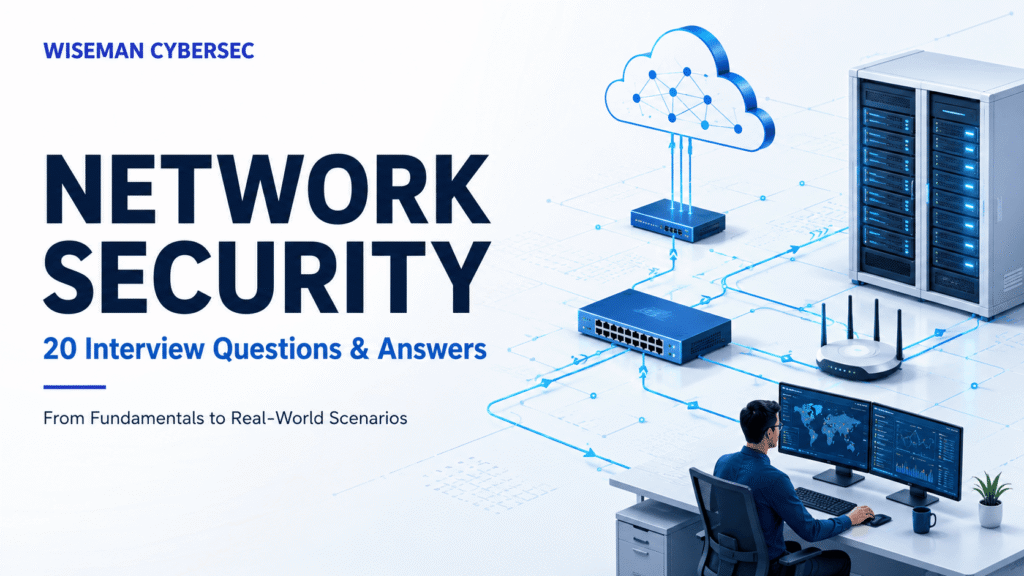
Prepare for your network security interview with 20 essential questions and answers covering security fundamentals, firewalls, IDS/IPS, network attacks, Zero Trust, and real-world security scenarios.
20 DFIR Interview Questions and Answers
Prepare for your DFIR interview with 20 essential questions and answers covering digital evidence collection, endpoint and memory forensics, network analysis, and real-world incident investigation scenarios.
MFA Is Not Enough: The Rise of Vishing, Session Hijacking and SaaS Identity Attacks
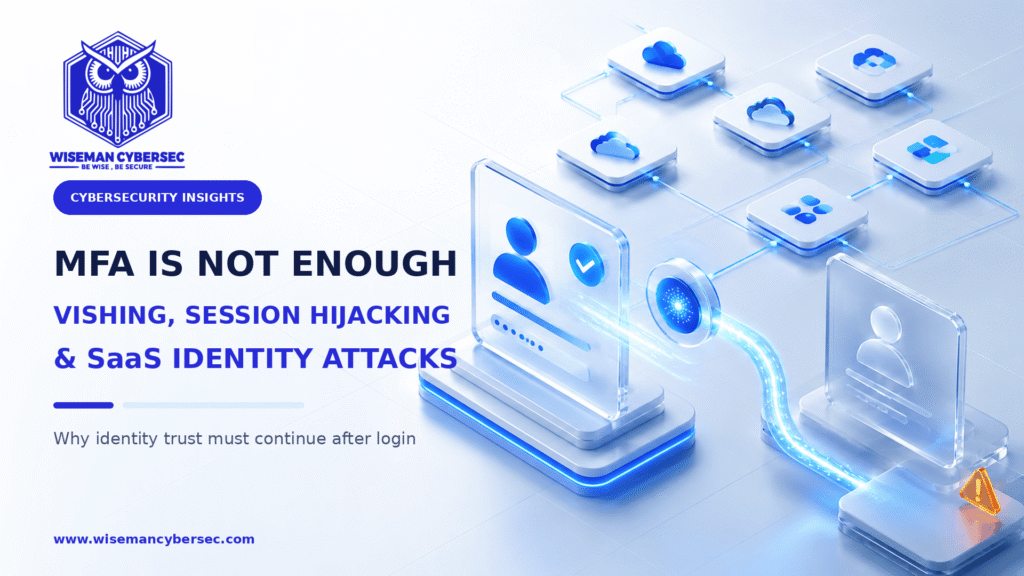
MFA is no longer enough to secure modern identities. Attackers are targeting account recovery, authenticator enrollment, session tokens, and trusted SaaS connections. Learn how vishing, session hijacking, phishing-resistant authentication, and continuous identity monitoring are reshaping identity security in 2026.
AI Agents Are the New Privileged Insiders: Is Your IAM Strategy Ready?
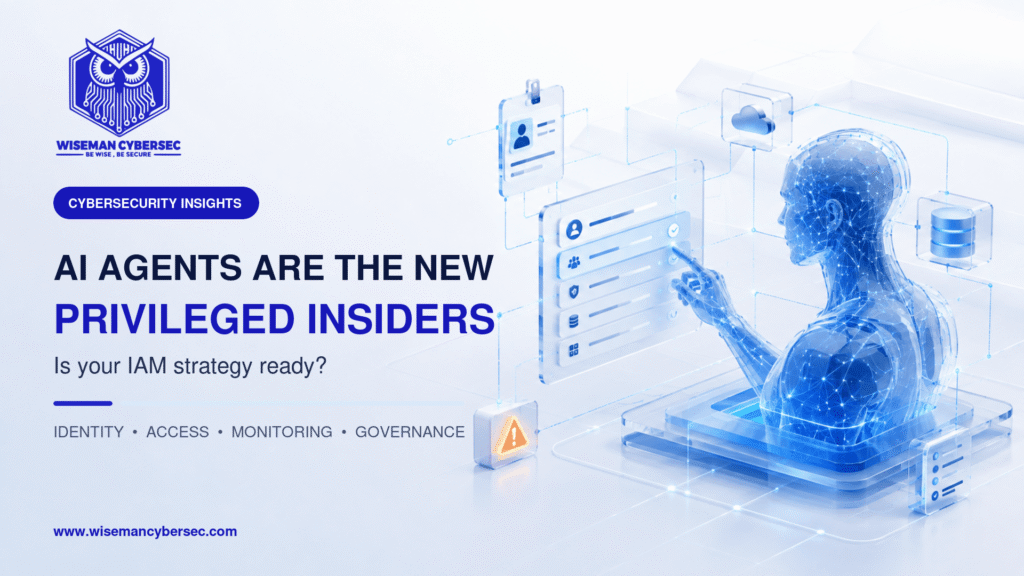
Artificial intelligence is no longer limited to answering questions or generating content. AI agents can now read emails, access documents, query databases, create tickets, interact with cloud platforms, execute code and initiate business workflows. In many organisations, they are being connected to the same applications and data used by employees and administrators. That creates a critical cybersecurity question: If an AI agent can access sensitive systems and take actions independently, should it be treated like a user, an application—or a privileged insider? The answer may define the next major challenge for Identity and Access Management. From AI Assistant to Digital Actor Traditional AI assistants primarily provided information. Agentic AI changes this model because an agent can interpret a goal, decide what steps to take, use connected tools and act with limited human supervision. This is valuable—but it also changes the risk. An ordinary chatbot may produce an incorrect answer. A highly privileged AI agent could send an email, modify a record, expose confidential data, change cloud resources or execute an unauthorised command. The security conversation must therefore move beyond “Is the AI model safe?” to a more operational question: “What identity is the agent using, what is it allowed to access and who is accountable for its actions?” Every AI Agent Needs an Identity Employees have user accounts. Applications have service identities. Workloads have machine identities. AI agents also need identities that can be individually authenticated, authorised, monitored and revoked. However, many early AI deployments rely on: When several agents operate through one shared account, security teams may see that an action occurred without being able to determine which agent initiated it, why it was performed or whose instruction triggered it. This weakens accountability and creates serious challenges for auditing, incident response and regulatory compliance. How an AI Agent Can Become a Privileged Insider An AI agent does not need malicious intent to create insider-like risk. It only needs excessive access, an unsafe instruction or a compromised integration. 1. Indirect prompt injection An attacker can hide malicious instructions inside an email, webpage, document or data source that an agent is asked to process. If the agent treats that external content as a trusted instruction, it may disclose information or perform an unauthorised action. This is particularly dangerous when the same agent can both consume untrusted content and use privileged tools. 2. Excessive permissions An agent created to summarise emails may not need permission to send messages or delete content. An agent that analyses cloud configurations should not automatically have the ability to modify them. Giving an agent more access than its task requires turns a single error or manipulated instruction into a much larger security incident. 3. Stolen tokens and secrets API keys, session cookies, access tokens and embedded credentials can allow attackers to operate through trusted integrations. Multifactor authentication may not protect an organisation if an attacker steals an already-authorised token. 4. Third-party tools and skills AI agents increasingly rely on plugins, connectors, tools and reusable skills. A malicious or poorly secured component can become a software-supply-chain entry point, especially when the agent has access to files, systems or command execution. 5. Agent-to-agent escalation One agent may ask another agent to complete a specialised task. If identities, permissions and trust boundaries are unclear, harmful instructions can travel across several agents while accountability becomes increasingly difficult to establish. IAM Must Evolve for Agentic AI The principles are familiar, but they must now be applied to autonomous digital actors. Give every agent a unique identity Avoid shared identities wherever possible. Each agent should have a clearly registered owner, business purpose, approved tools and defined data-access scope. Apply least privilege by default Grant only the minimum permissions required for the current task. Prefer short-lived, task-specific authorisation over permanent access. Separate reading from acting An agent that reads untrusted content should not automatically be able to perform sensitive actions. High-risk capabilities should be isolated and protected by additional approval controls. Require human approval for critical actions Financial transactions, privilege changes, data deletion, external communications and production-system modifications should require explicit human confirmation. Continuously evaluate access An agent’s permissions should not remain unchanged simply because they were approved during deployment. Access must be reviewed as tools, tasks, data sources and business risks change. Build an immediate revocation mechanism Security teams need a reliable way to suspend an agent, revoke its tokens and disable its integrations without affecting unrelated systems. The SOC Must Monitor Behaviour, Not Just Logins Traditional monitoring often asks whether the correct identity successfully authenticated. For AI agents, successful authentication is only the beginning. Security Operations Centres should also monitor: The challenge is to establish a behavioural baseline for each agent and identify when its actions no longer match its approved purpose. This is where IAM, SOC, threat detection and AI governance must work together. Six Questions Every Organisation Should Ask Before giving an AI agent access to business systems, security leaders should ask: If any answer is unclear, the agent may already represent an unmanaged identity risk. The Future of IAM Is Not Only Human Organisations are accustomed to managing employees, contractors, applications and service accounts. They must now prepare for an environment containing hundreds—or potentially thousands—of AI agents acting across business systems. These agents will need identity lifecycle management: registration, authentication, authorisation, monitoring, periodic review and secure decommissioning. The organisations that establish these controls early will be better positioned to benefit from agentic AI without creating a new class of invisible privileged users. AI agents may be autonomous, but their access must never be unaccountable. At Wiseman CyberSec, we believe the future of cybersecurity will require IAM, SOC operations and AI governance to operate as one connected discipline. Security professionals must be prepared not only to protect human identities, but also to govern the rapidly growing population of non-human and agentic identities.Be Wise. Be Secure. – Wiseman CyberSec Secure AI Agents with Modern IAM Learn how Identity and Access Management, AI governance, and Zero Trust principles help secure AI
WAPT PRACTICE QUESTION BANK
Pooja G******

Trainee
CISA EXAM PRACTICEQUESTION BANK

DPDP ACT & RULES PRACTICE QUESTION BANK
COMPTIA NETWORK+ N10-009 Practice Question Bank
Prepare for SOC Analyst L1 interviews with 20 practical questions covering SIEM, logs, alert triage, EDR, phishing, escalation and incident response.
Quick Insights Interviewers are testing structured investigation thinking, not only memorized definitions. A strong L1 answer explains what to validate, how to scope the activity, when to escalate and what to document. Core preparation areas include SIEM searches, identity and endpoint evidence, network logs, phishing, threat intelligence and incident-response communication. Knowing the boundary of L1 authority is a strength. Safe escalation is better than unsupported containment. What Interviewers Really Look For SOC interviews are moving beyond definitions. Employers want analysts who can turn an alert into a defensible investigation: validate the telemetry, correlate evidence, manage uncertainty, communicate clearly and escalate at the right time. An L1 or Tier 1 SOC Analyst is usually the first human checkpoint in the detection-and-response workflow. The role requires networking and operating-system fundamentals, but technical knowledge alone is not enough. Analysts must distinguish unusual activity from malicious activity, preserve evidence, work within authorization boundaries and leave behind a ticket that another analyst can trust. The questions below are designed as model answers, not scripts to memorize. Adapt them to the tools, playbooks and responsibilities of the organization interviewing you. A Simple Framework for Scenario Questions Use V-SCOPE: Validate the alert; Scope users, assets and time; Correlate evidence; Observe behavior and context; Prioritize and preserve; Escalate with clear documentation. This framework prevents two common interview mistakes: jumping directly to a conclusion and proposing a disruptive action before understanding scope, authority or business impact. 20 SOC Analyst L1 Interview Questions and Answers What is the role of an L1 SOC Analyst? An L1 SOC Analyst is usually the first operational reviewer of security alerts. The analyst monitors the alert queue, validates whether the detection has enough evidence, gathers context about the user, device, IP address and affected service, records a clear disposition, and escalates cases that exceed L1 authority or require deeper investigation. A strong answer should also mention boundaries. L1 analysts follow playbooks and escalation procedures; they should not perform disruptive containment actions simply because an alert looks suspicious. Their value comes from accurate triage, evidence preservation, timely escalation, clean documentation and reliable shift handover. What is the difference between an event, an alert and an incident? An event is an observable occurrence, such as a login, process creation, DNS query or firewall connection. An alert is generated when a detection rule, analytic or security product identifies activity that may require investigation. An incident is a confirmed or reasonably suspected cybersecurity occurrence that requires coordinated response under the organization’s criteria. Not every event becomes an alert, and not every alert becomes an incident. The analyst’s job is to evaluate evidence and context before assigning a disposition. Treating every alert as an incident creates noise; dismissing alerts without validation creates risk. What is a SIEM, and how does an L1 analyst use it? A Security Information and Event Management platform collects and centralizes security-relevant data, normalizes or parses fields, supports search and correlation, and generates alerts or cases. An L1 analyst uses the SIEM to review detection logic, search related activity, build a timeline and connect evidence across identity, endpoint, network, email, cloud and application sources. A SIEM does not replace analyst judgment. The quality of an investigation depends on log coverage, timestamp consistency, parsing accuracy, asset context and detection design. A polished interview answer should explain both what the platform enables and where its limitations begin. What fields do you check first when opening an alert? Start with the alert time and timezone, detection name, rule logic, affected user and host, source and destination IP addresses, ports, process or command line, action or result, severity, confidence and asset criticality. Then look for related alerts, recent changes, previous activity and the normal baseline for the entity. The exact fields vary by use case. A failed-login alert requires authentication status, logon type and source context; an endpoint alert requires process-tree and file information. The key is to avoid investigating one isolated field without establishing who, what, where, when and expected behavior. Walk me through your alert-triage process. First, validate that the alert and underlying telemetry are complete. Next, scope the affected users, hosts, IP addresses and time window. Correlate activity across relevant sources, enrich important observables, compare the behavior with known baselines and approved changes, and build a short timeline. Then classify the alert as a true positive, benign positive, false positive or inconclusive case; assign severity and priority using business context; recommend or take only authorized actions; and document the evidence, reasoning, limitations and next step. Escalation should contain enough information for the receiving analyst to continue without repeating the entire investigation. What is the difference between a true positive, false positive and benign positive? A true positive means the detection correctly identified activity that is malicious or violates security policy. A false positive means the detection incorrectly flagged activity because the rule logic, threshold, data quality or context was wrong. A benign positive means the detection correctly identified the behavior, but the activity was expected and authorized, such as a sanctioned administrative script. This distinction matters for detection improvement. A false positive may require logic or parsing changes; a benign positive may require approved contextual suppression while preserving coverage for unauthorized use. The analyst should document the evidence supporting the disposition rather than selecting a closure reason by habit. How are alert severity and investigation priority different? Severity represents the potential or observed impact of the activity. Priority determines the order in which the SOC should work the case. Priority considers severity together with confidence, asset criticality, user privilege, scope, business impact, regulatory sensitivity and time pressure. For example, a technically moderate alert affecting a domain administrator or critical production server may receive a higher priority than a high-volume alert on a low-value test system. A mature analyst does not rely on the vendor’s default severity alone; they apply organizational context. How would you tune a noisy detection without disabling it? Measure the alert volume and review a representative sample to identify why the rule